
Manual Documentation
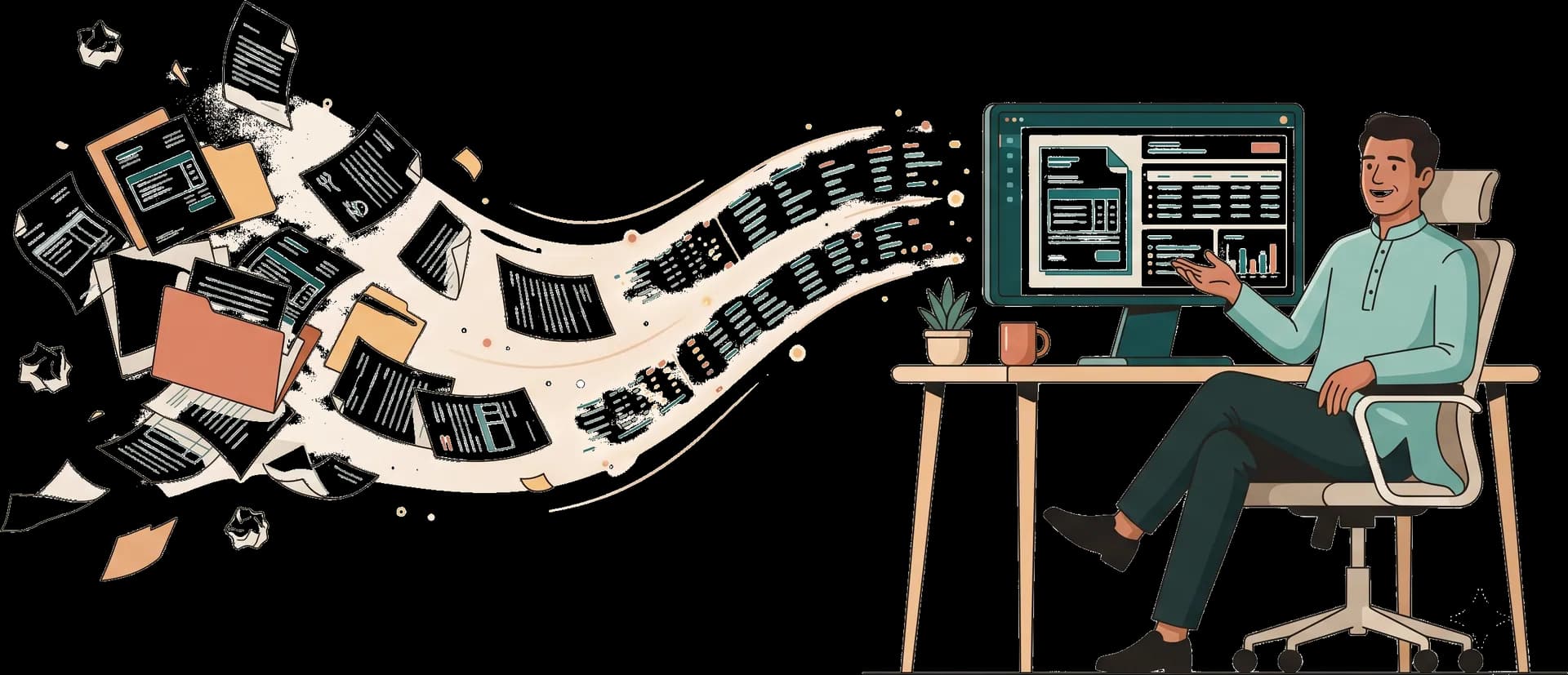
Final draft, final final draft, version 2 final - entire EXIM documentation moves on PDFs and rework. Errors are routine, costly, and untraceable.

Maritime India Vision 2030 identifies six critical wounds in EXIM documentation. All routine. All costly. All solvable with software.

Final draft, final final draft, version 2 final - entire EXIM documentation moves on PDFs and rework. Errors are routine, costly, and untraceable.

Documents scatter across WhatsApp threads, email, and personal drives. Every stakeholder maintains a private copy. Nothing is the source of truth.

Manual processing inflates vessel turnaround, container dwell, and total logistics cost - keeping India behind global shipping benchmarks.

Documents are treated as dead paperwork. No financing signals, no freight optimisation, no operational insight extracted from the data they carry.

Exporters, CHAs, freight forwarders, banks, port authorities - all operating in disconnected silos. No unified view of any single shipment.

India ranks 44th in the global Logistics Performance Index. eBL adoption is near zero. Digital trade infrastructure exists on paper, not at port.
Each pillar maps directly to a Maritime India Vision 2030 initiative. Scroll to follow the journey.
One repository for shipment documents - exporters, CHAs, forwarders, banks, port authorities, all reading the same record.

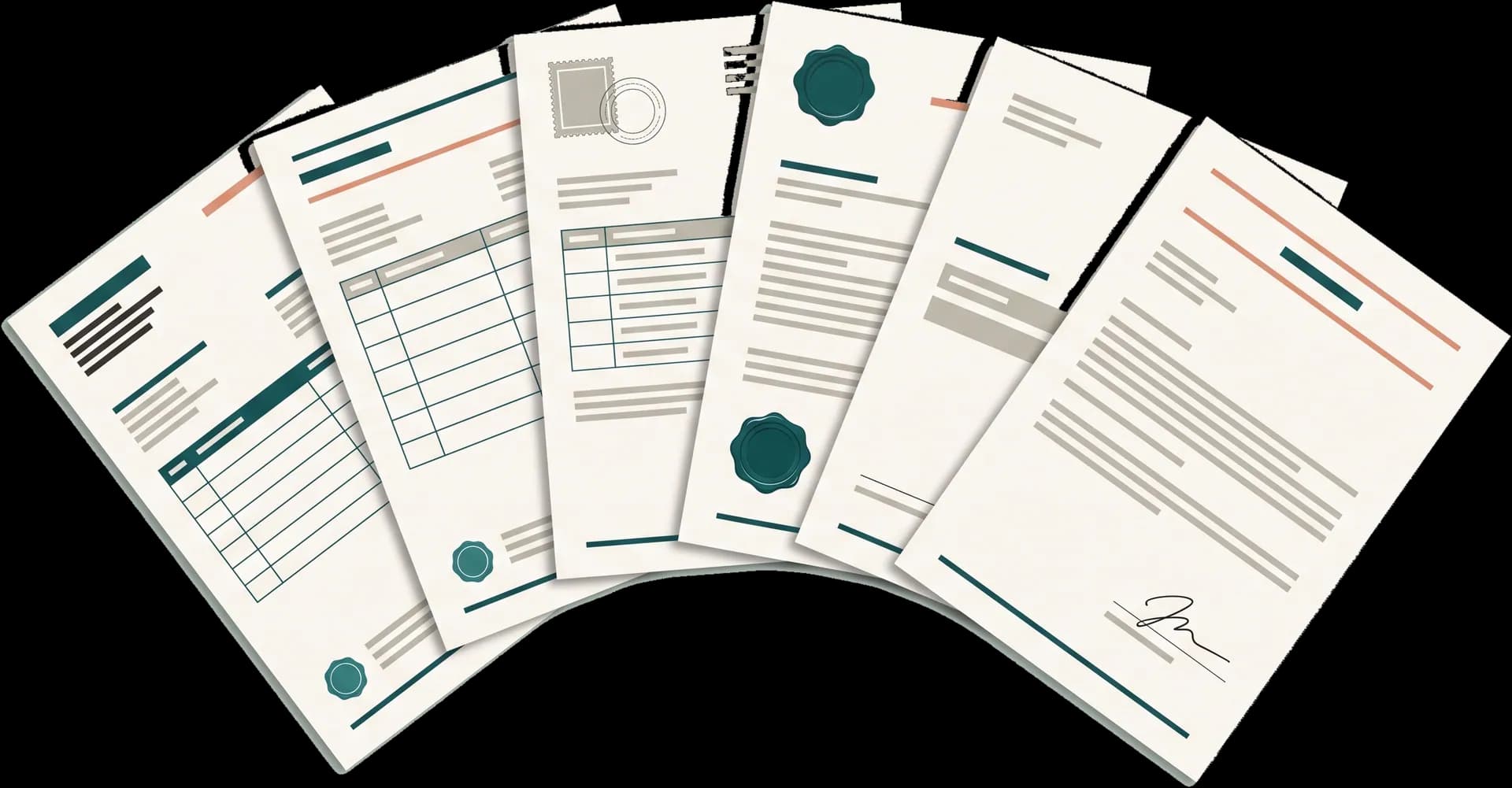
Auto-templated Bill of Lading, Certificate of Origin, packing list and invoice - with destination-aware compliance checks before submission.

Documents → data → action. Credit signals for MSME finance, freight pattern optimisation, and port-arrival predictions via ULIP integration.

Real-time cargo, truck and slot data flowing into Port Community System (PCS 1X) and ULIP2 - so ports operate against real numbers, not paperwork.

Electronic Bill of Lading, EDI for Bill of Entry & Shipping Bill, digital dispatch and bank presentation. Paperless trade by default.

MIV 2030 · Ministry of Ports, Shipping & Waterways
Six metrics published by the Ministry of Ports, Shipping & Waterways. Faster, cheaper, more digital - and we're building the operating layer to get there.
Vessel turnaround time, containers
Average container dwell time
India's share in world exports
Logistics cost as % of GDP
Trading across borders, World Bank
Electronic Bill of Lading adoption
Source · Maritime India Vision 2030, Ministry of Ports, Shipping & Waterways
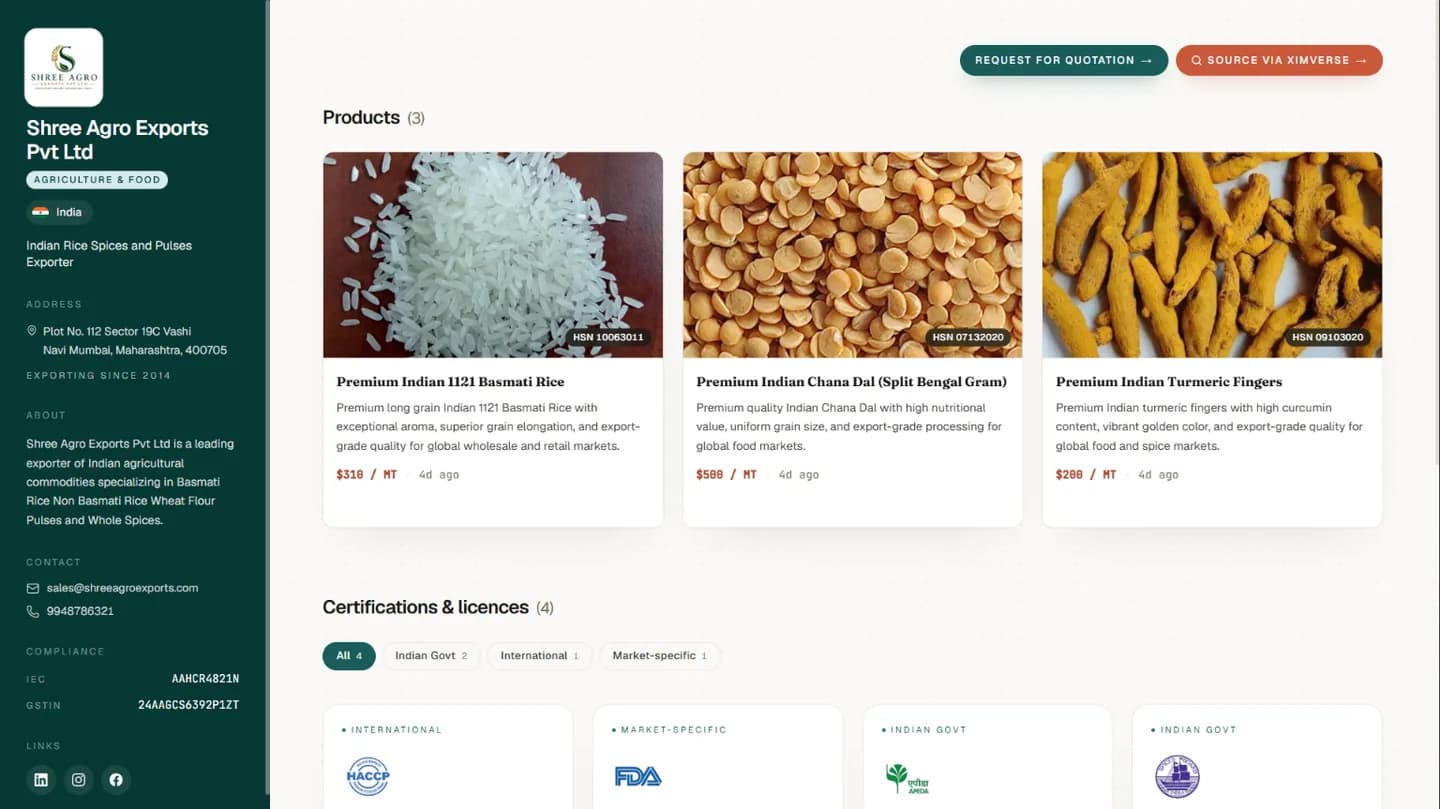
Search India's complete ITC-HS 2022 tariff database. Import policy, export policy, and trade restrictions - all in one lookup.
Searching…
Try a product name, HSN code, or chapter
From the exporter filing the first invoice to the bank releasing trade finance - every role in a maritime shipment, on one operating layer.

Faster docs, real status, finance off shipment history.

Discover suppliers, predict cargo, clear faster at the gate.

The operators who turn paper into clearance.

Booking, documents and tracking on a single live workspace.

No more empty miles. Slot booking that respects driver time.

Electronic Bill of Lading and digital manifests for faster turnaround.

Verified shipment data unlocks trade finance for the smallest MSMEs.

Real-time data into PCS 1X and ULIP2. No surprises at the gate.
Six concrete outcomes - measured against Maritime India Vision 2030 targets.
No collateral
Credit on shipment history
Verified shipment documents become creditworthiness proof. Trade finance flows to small exporters without collateral hurdles.
Zero
Empty return miles
Trucks heading back from ports get auto-matched with importers' inbound cargo. No more empty miles, no wasted capacity.
Real-time
Into PCS 1X · ULIP2
CFS managers know exactly what's arriving - which truck, which slot, which logistics partner - via real-time ULIP integration.
5 days → minutes
Bill of Lading processing
Electronic Bill of Lading collapses 5–10 day processing to minutes. Vessels turn around faster. Exporters get paid sooner.
−44%
Container dwell time
Digital clearance shrinks container dwell - directly hitting the MIV 2030 target of under 40 hours.
+138%
Targeted export-share growth
Faster, cheaper, error-free documentation accelerates India's share of world exports from ~2.1% toward 5%.