Turning Government Digital Rails Into Coordinated, Predictable Port Execution
Turning Government Digital Rails Into Coordinated, Predictable Port Execution
Executing the India Maritime Vision on the Ground India’s maritime and EXIM ecosystem has undergone a quiet but powerful transformation over the last decade. Yet, despite visible progress, ports, CFSs, and terminals continue to struggle with dwell time, congestion, and coordination failures. The reason is not lack of intent or infrastructure. It is the absence of an execution orchestration layer. This is exactly where Ximverse fits.
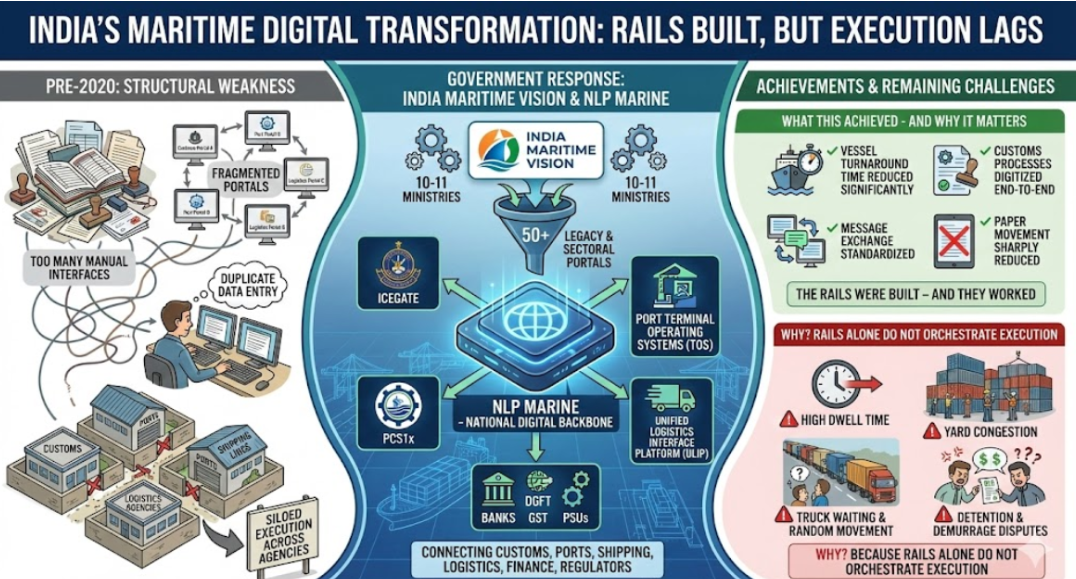
In the early 2020s, the Government of India correctly identified a structural weakness in the EXIM value chain: Too many manual interfaces
Fragmented portals
Duplicate data entry
Siloed execution across agencies
To address this, the government launched a coordinated, multi-ministry effort under the India Maritime Vision, bringing together: ~10–11 ministries
50+ legacy and sectoral portals
Customs, ports, shipping, logistics, finance, and regulators
This effort culminated in NLP Marine — a national digital backbone connecting: ICEGATE
PCS1x
Port Terminal Operating Systems (TOS)
Unified Logistics Interface Platform (ULIP)
Banks, Directorate General of Foreign Trade, GST, and other PSUs
These initiatives delivered real, measurable outcomes: Vessel Turnaround Time reduced significantly
Customs processes digitized end-to-end
Message exchange standardized
Paper movement sharply reduced
The rails were built — and they worked. However, as highlighted in our first blog, ports, CFSs, and terminals still face: High dwell time
Yard congestion
Truck waiting and random movement
Detention and demurrage disputes
Why? Because rails alone do not orchestrate execution.
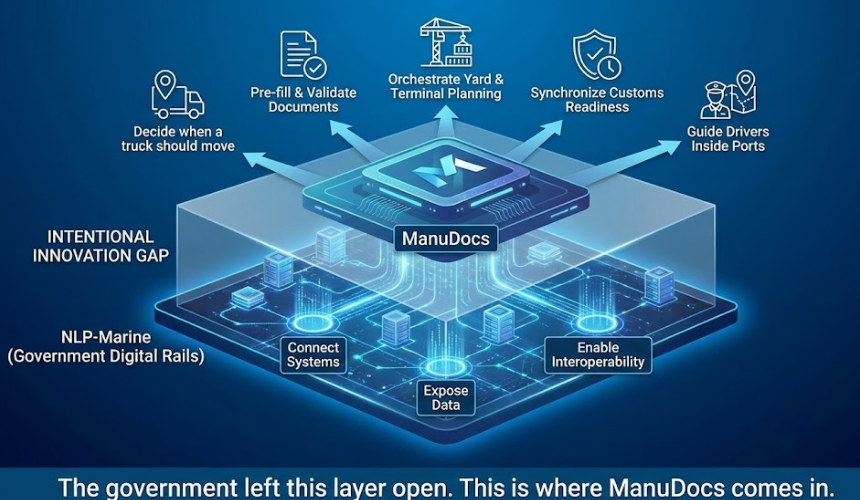
NLP-Marine was designed to: Connect systems
Expose data
Enable interoperability
It was never designed to: Decide when a truck should move
Pre-fill and validate documents at source
Orchestrate yard and terminal planning
Synchronize customs readiness with logistics
Guide drivers inside ports
This gap is intentional. The government deliberately left this layer open for “latch-on service providers” — platforms that can innovate on top of public digital rails. This is exactly where Ximverse comes in.
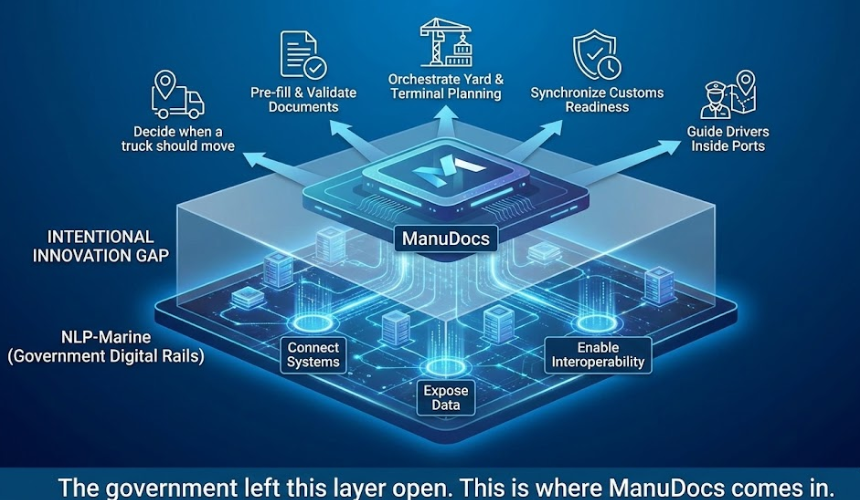
Ximverse is built in the same direction as the India Maritime Vision, not parallel to it. If NLP-Marine is the highway, Ximverse is the traffic controller. Ximverse converts passive digital connectivity into active, coordinated execution across the EXIM value chain.
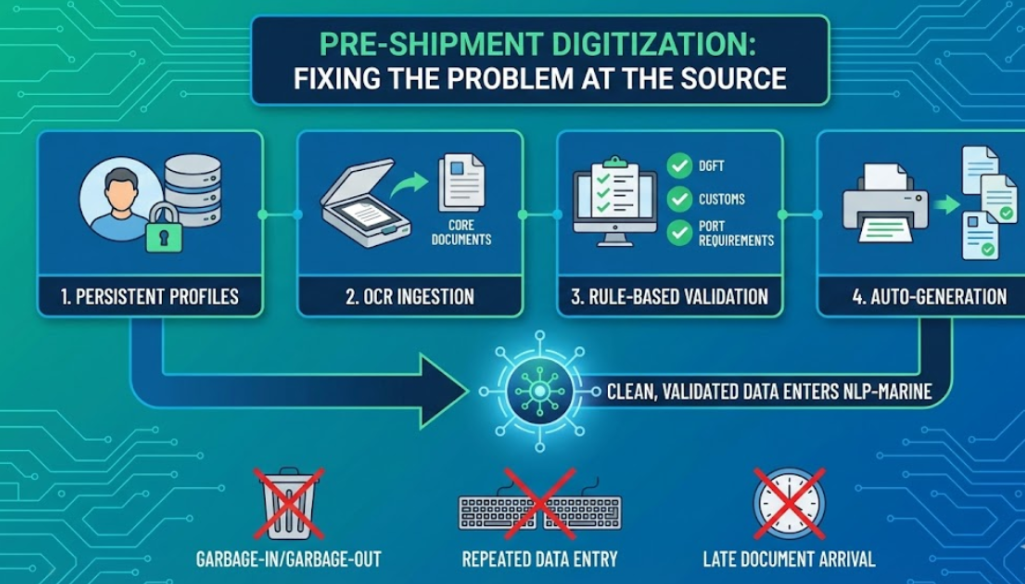
One of the biggest causes of downstream inefficiency at ports and CFSs is late and poor-quality data. Ximverse solves this by: Creating persistent exporter/importer profiles
OCR-based ingestion of core documents
Rule-based validation aligned with DGFT, Customs, and port requirements
Auto-generation of compliant documents
Result: Clean, standardized, validated data enters NLP-Marine before the shipment moves. This directly eliminates: Garbage-in / garbage-out
Repeated data entry
Late document arrival at ports and CFSs
##2. Turning NLP-Marine From “Data Pipes” Into “Actionable Signals”
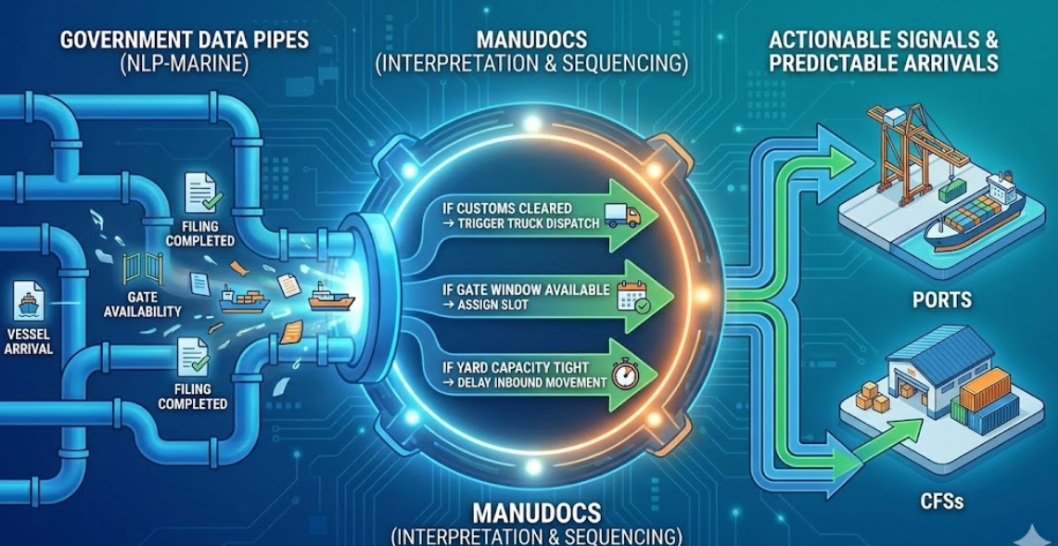
Government systems expose events such as: Filing completed
Gate availability
Vessel arrival
Ximverse interprets and sequences these events: If customs is cleared → trigger truck dispatch
If a gate window is available → assign slot
If yard capacity is tight → delay inbound movement
Result: Ports and CFSs receive predictable arrival signals, not last-minute surprises.
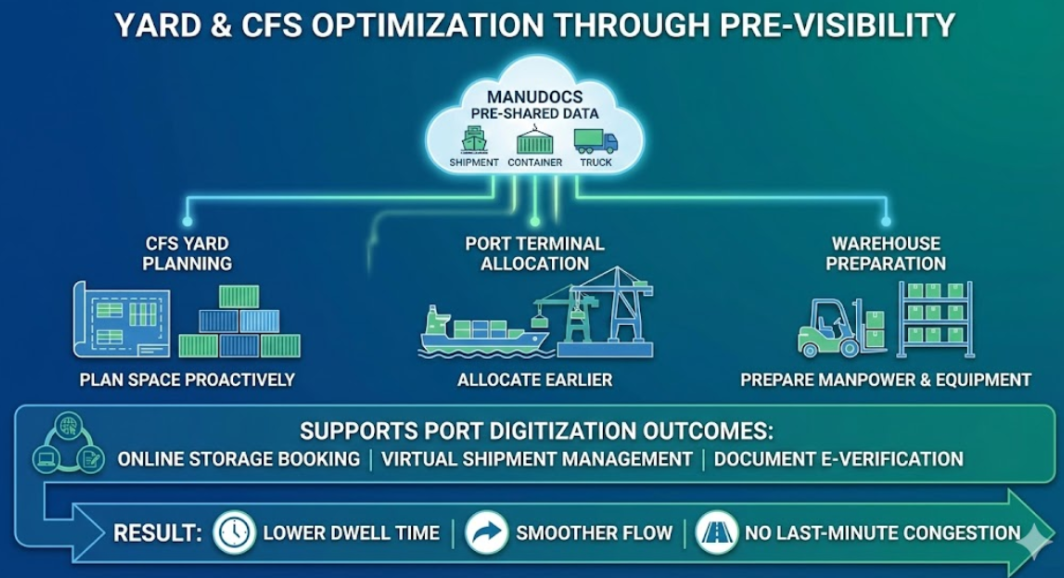
Because Ximverse shares shipment, container, and truck data in advance: CFSs plan yard space proactively
Ports allocate terminals earlier
Warehouses prepare manpower and equipment
This directly supports key port digitization outcomes such as: Online booking for storage capacity utilization
Virtual booking systems for shipment management
Document e-verification via shared repositories
Result: Lower dwell time, smoother flow, and elimination of last-minute congestion.
##4. Guided Truck Movement & Automatic Gate-In / Gate-Out
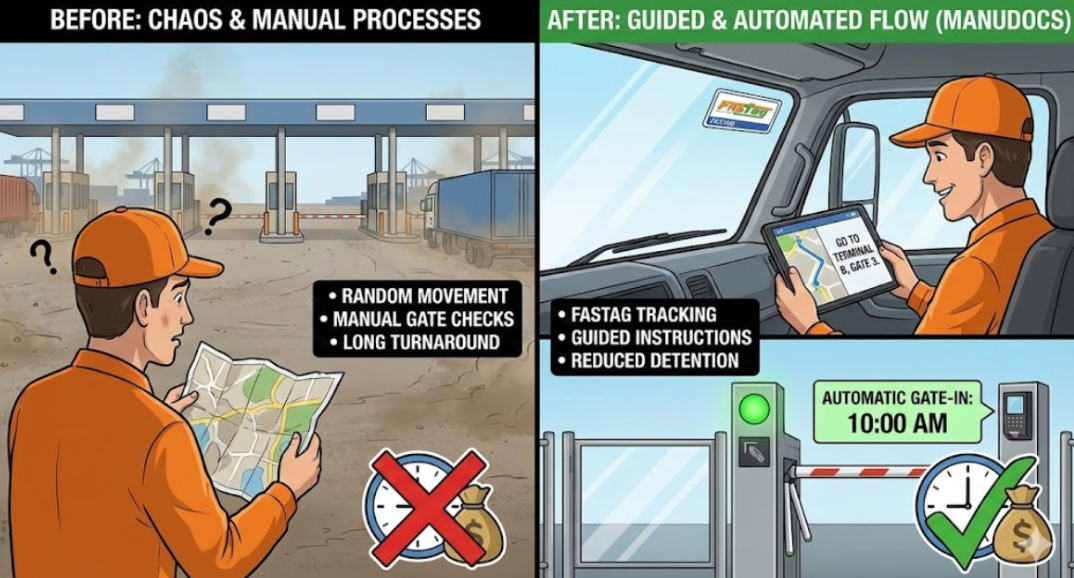
Ximverse integrates: Fastag-based tracking
Terminal and gate mapping
Driver-facing UI with clear instructions
Drivers know: Which terminal to go to
Which gate to enter
Where to stop and scan
Result: Reduced truck turnaround time
No random movement inside ports
Automatic, timestamped gate-in / gate-out
This directly reduces detention and demurrage, with digital proof.
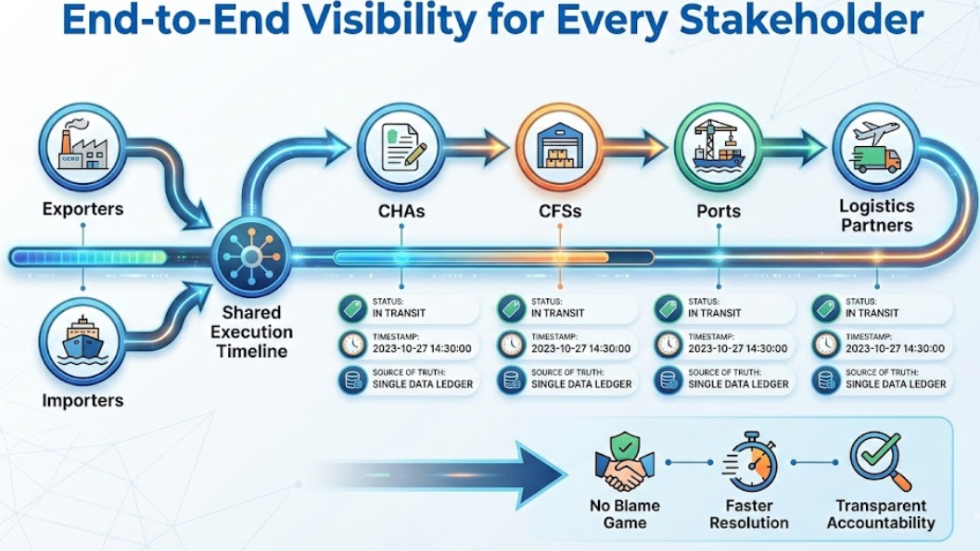
Ximverse provides a shared execution timeline for: Exporters
Importers
CHAs
CFSs
Ports
Logistics partners
Everyone sees: The same status
The same timestamps
The same source of truth
Result: No blame game. Faster resolution. Transparent accountability.
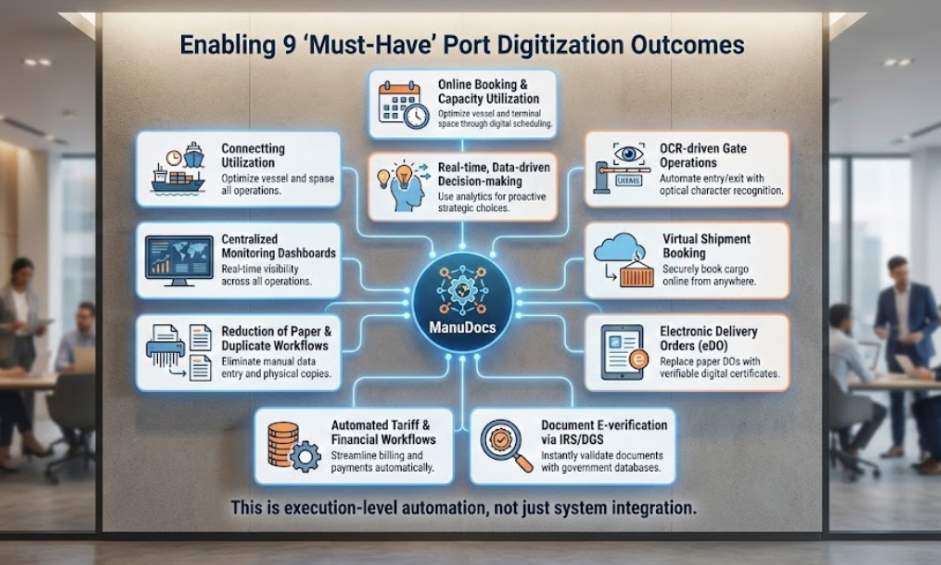
From the Government’s prioritized digital solutions framework, Ximverse directly enables or accelerates 9 critical “must-have” outcomes, including: Online booking & capacity utilization
OCR-driven gate operations
Virtual shipment booking
Electronic Delivery Orders (eDO)
Document e-verification via IRS/DGS
Automated tariff and financial workflows
Reduction of paper and duplicate workflows
Centralized monitoring dashboards
Real-time, data-driven decision-making
This is execution-level automation, not just system integration.
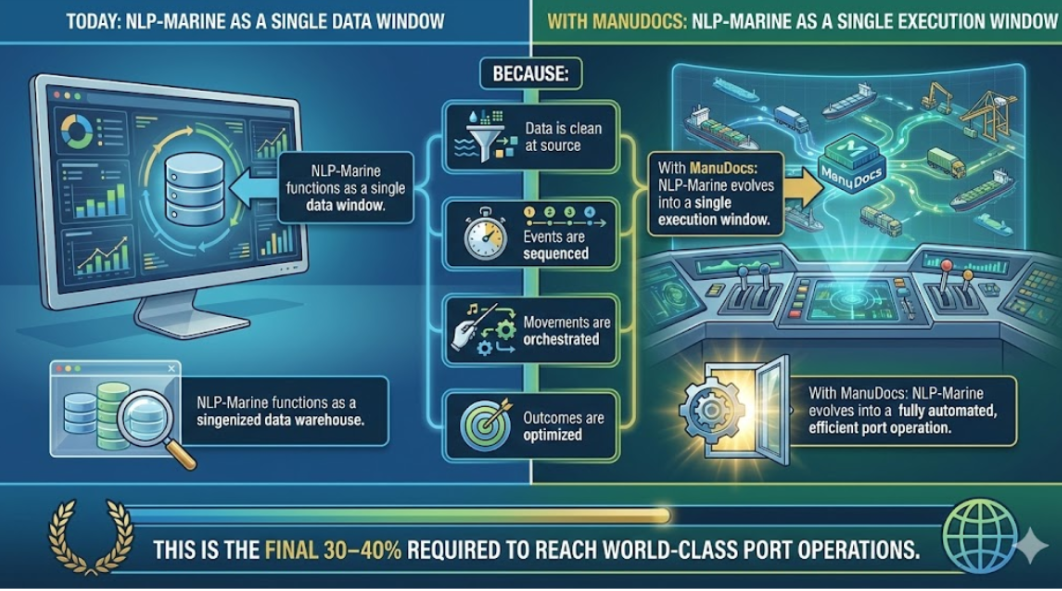
Today: NLP-Marine functions as a single data window
With Ximverse: NLP-Marine evolves into a single execution window
Because: Data is clean at source
Events are sequenced
Movements are orchestrated
Outcomes are optimized
This is the final 30–40% required to reach world-class port operations.
##Alignment With Customs 2.0: Built for What’s Coming Next
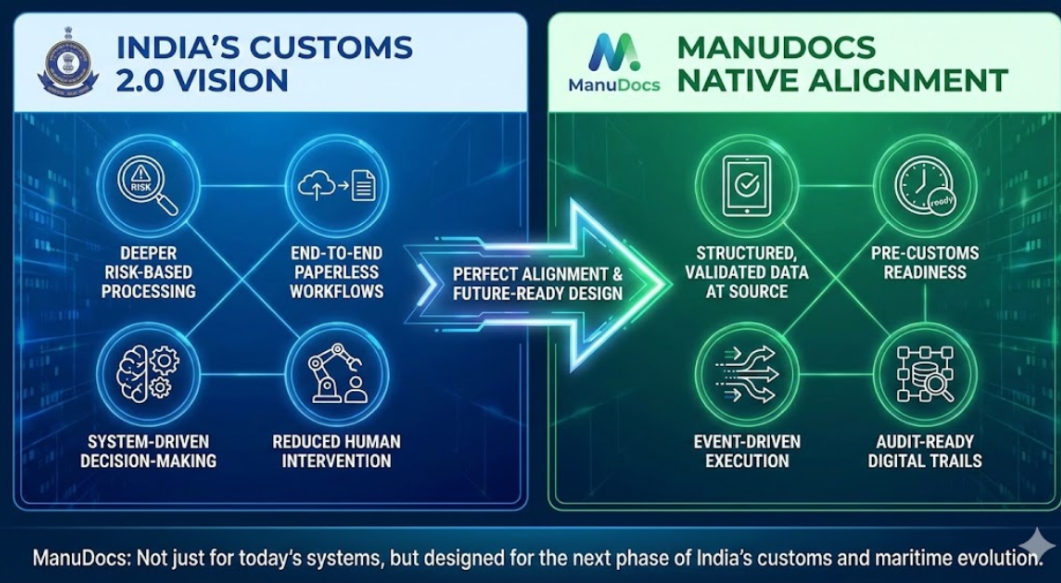
India is now preparing for Customs 2.0, which focuses on: Deeper risk-based processing
End-to-end paperless workflows
System-driven decision-making
Reduced human intervention
Ximverse is natively aligned with this direction: Structured, validated data at source
Pre-customs readiness
Event-driven execution
Audit-ready digital trails
Ximverse does not just work with today’s systems — it is designed for the next phase of India’s customs and maritime evolution.
The government built the backbone
The government opened it to innovation
Ximverse delivers the missing execution layer
No system is replaced. No authority is bypassed. No policy is contradicted. Public rails + private orchestration = world-class ports.
“India has already built the digital nervous system of its maritime trade. Ximverse is the coordination layer that makes it move in sync.” This is how India moves from digitized ports to coordinated ports — and finally, to globally competitive ports.